Forest paths
Reading a path before it changes
A path is a promise that the world has somewhere to go. The first job is to make that promise legible.
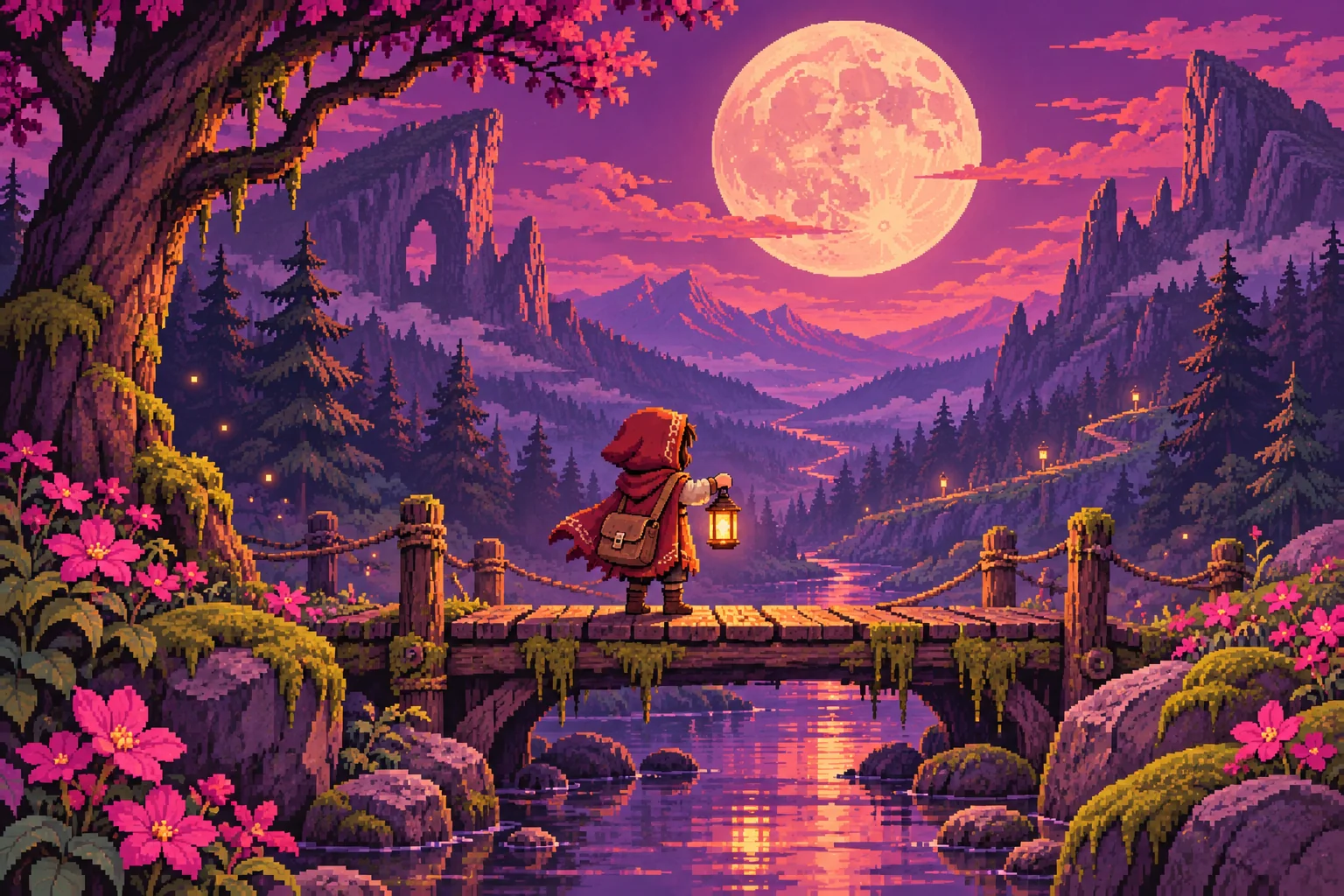
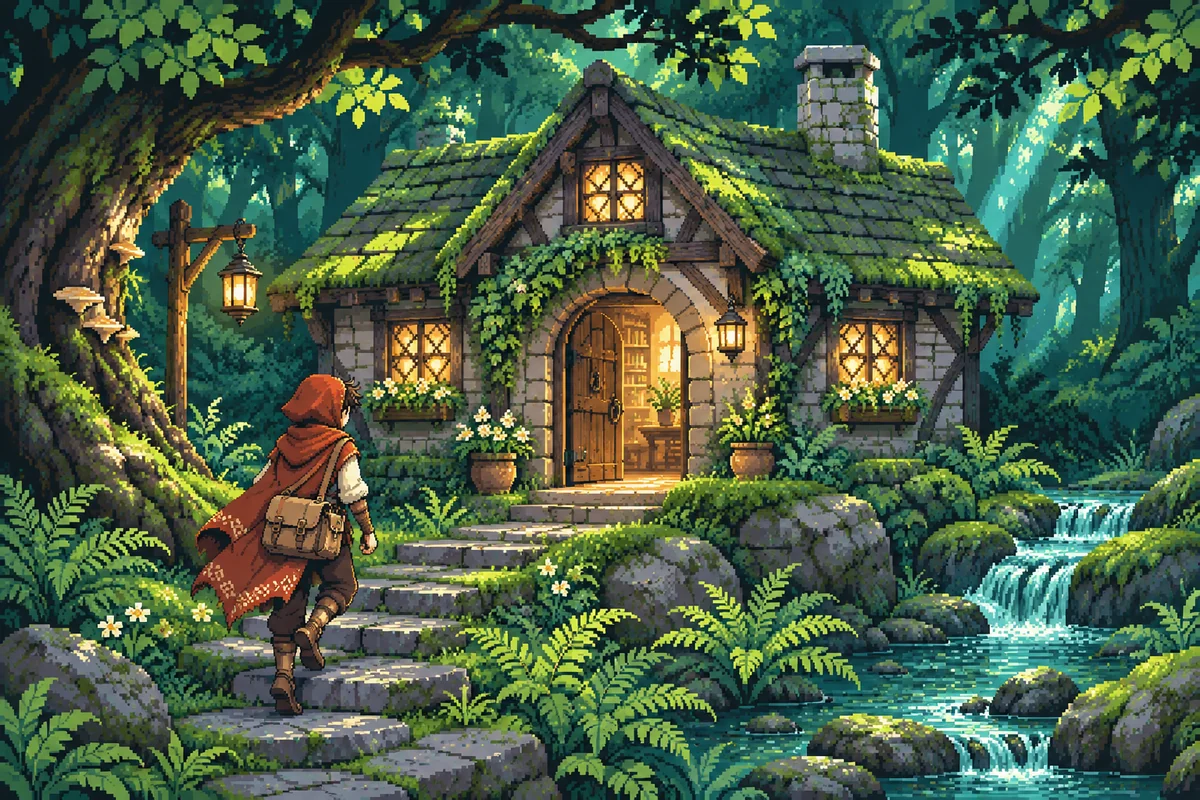
In the concept work for Mosslight Post, bridges, lanterns, and lit windows do more than decorate the forest. They form a sentence the player can read from a distance. A warm window says nearby.
A lantern chain says follow this edge.
A stepping stone in a stream says this crossing is possible.
We want each of those signals to work before the path asks for a decision. The player should be able to build a rough map in their head, choose a direction, and still notice a new detail when they get closer. That gap between the broad read and the close read is where a small place starts to feel inhabited.
When a route changes, it needs to leave evidence behind. A repeated silhouette, a piece of rope, or the direction of the water can become a clue without turning the forest into a signboard. The mystery comes from putting familiar things in an unfamiliar order, not from hiding the rules.
Open the bridge sketch note
The bridge is useful in a sketch because it offers three readings at once: a crossing, an edge, and a vantage point. We keep returning to compositions where the player can see part of the route ahead but cannot see the whole shape of it yet.
That is the balance we are working through: enough information to move with confidence, enough uncertainty to make the next turn worth noticing.